
Ekklesia
January to March 2026
Isssue 30 – 1/2026

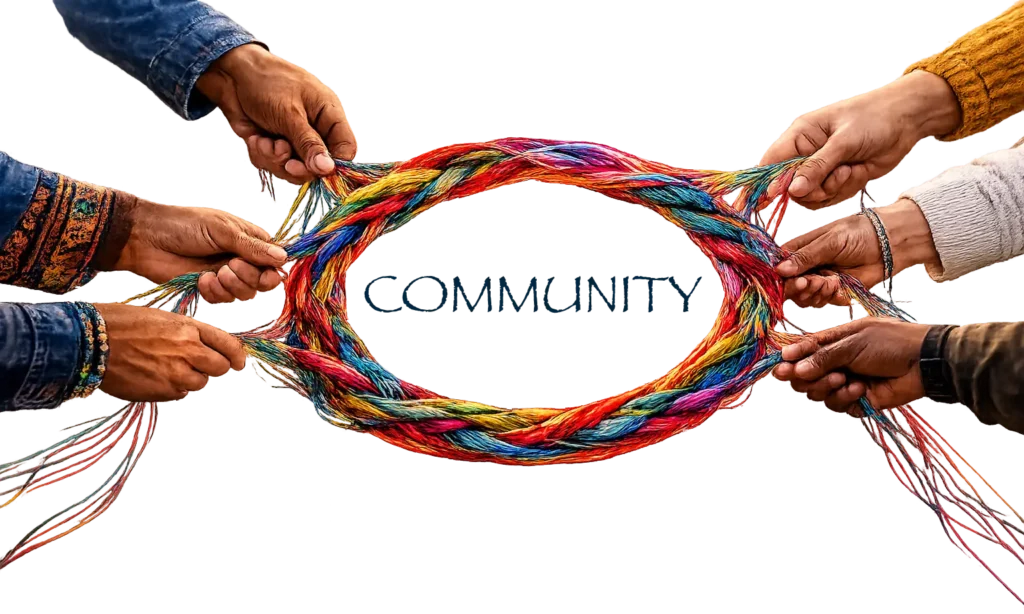
Reinventing Community?
As communities fragment and individualism grows, this issue of Ekklesía explores how authentic communion can be renewed.
Through diverse ecclesial experiences, it highlights welcome, mission, synodality and shared responsibility.
Inspired by the Gospel, the contributors show that flourishing communities are consciously built through dialogue, openness, self-giving and mutual listening.

Editorial
There can be no sharing between those who are full of themselves
Authentic community is born not from equality alone but through mutual self-giving. Inspired by Christ’s kenosis, lasting communion grows when people freely set aside self-interest, embrace service, and place others at the center of their relationships.
Hubertus Blaumeiser
Never Solitary Travelers
In his homily at the Mass for the Jubilee of Synodal Teams and Participatory Bodies, on October 26, 2025, Pope Leo, focused on the deep nature and dynamic of every Christian community, as in a family where relationships do not follow the worldly logic of power.
Pope Leo XIV
Creative, meaningful communities as leaven
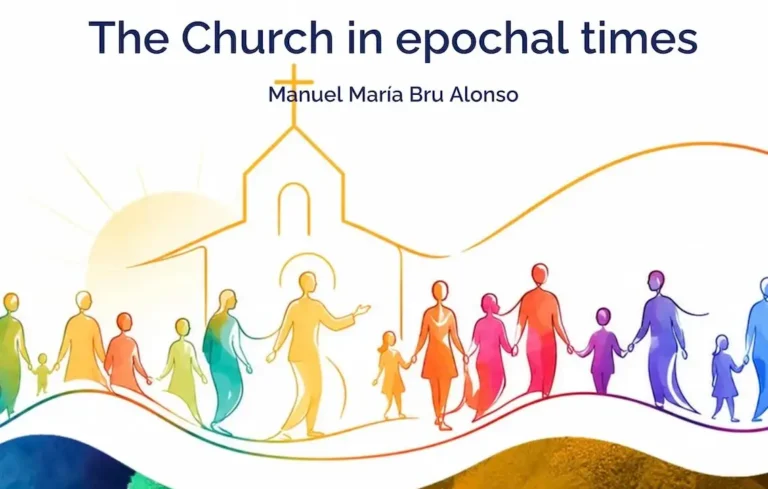
What is asked of Christian communities today? How should we face ever growing secularization? The author is the episcopal delegate for catechesis in the Archdiocese of Madrid (Spain). His thesis: There is a need for open communities, even small, welcoming spaces of accompaniment, listening, and prayer that transmit peace and the joyful celebration of the faith.
Manuel María Bru Alonso
Synodal Priests and Synodal Communities
The synodal journey calls parishes to ecclesial and spiritual conversion through shared discernment, mutual listening and greater lay participation, fostering collaborative leadership and reducing excessive clerical centralization in parish life and mission in Brazil.
Edilson Santos
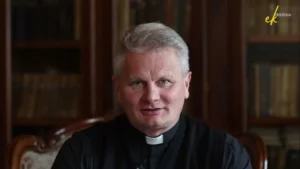
Parish ministry as a synodal vocation
Ľudovít Pokojný, a parish priest in Bratislava, the capital of Slovakia, reflects here on how the Church’s synodal journey can be a grace for increasing parish vitality, creativity, and relevance in today’s rapidly changing world.
L’udovít Pokojný
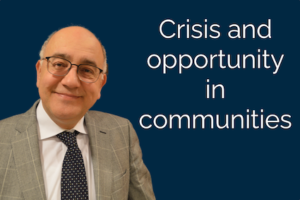
New wine in new wineskins
Using the Gospel image of new wine and new wineskins, the author shows communities must continually renew their founding inspiration, discovering fresh possibilities and expressions so their charism remains vibrant, fruitful, alive.
Luigino Bruni

Diversity: a creative potential
Like all families, religious communities are not lacking in tensions that arise from the diversity among their members, and varied cultures and ages can accentuate those tensions. Thus, adequate paths of accompaniment must be put in place.
Angsar Bock and Gabrielle Müller
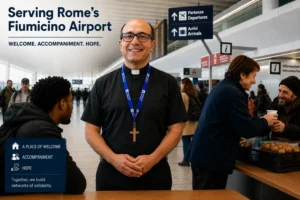
Lives in transit
Serving Rome’s Leonardo da Vinci Airport, this unique parish ministers to workers, residents and travellers, while developing flourishing pastoral initiatives and an extensive network of practical support for migrants, vulnerable people and those in need.
Giovanni Soccorsi
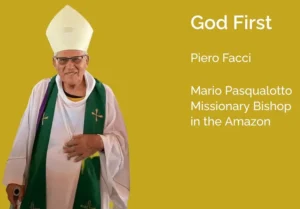
Through the life and witness of Bishop Mario Pasqualotto, a PIME missionary who served for nearly sixty years in the Brazilian Amazon, this article explores a priestly vocation rooted in God’s love and lived through communion, synodality and service. Now retired, he continues this mission by accompanying vulnerable young people at the Fazenda da Esperança in Manaus, which he founded in 2001.
Pathways to
communion
and dialogue

Ekklesía is a print and digital initiative available in various languages. It conveys and promotes the complementarity of the Church’s charismatic and ministerial dimensions in the light of the teachings of the Second Vatican Ecumenical Council.
Guided by the principle of universal brotherhood, readers are invited to journey and work together along paths of communion and dialogue. In this way, Ekklesía hopes to contribute to building a synodal reality in which all members of God’s people are valued in the common search for new ways to proclaim the Gospel of Jesus to men and women of our time.
Ekklesía’s articles focus on Church and societal renewal; relationships among different Churches and religions; encounters between diverse peoples and cultures; and dialogue with persons of differing convictions or of no particular religious belief.
Each quarterly issue focuses on a particular and relevant theme.
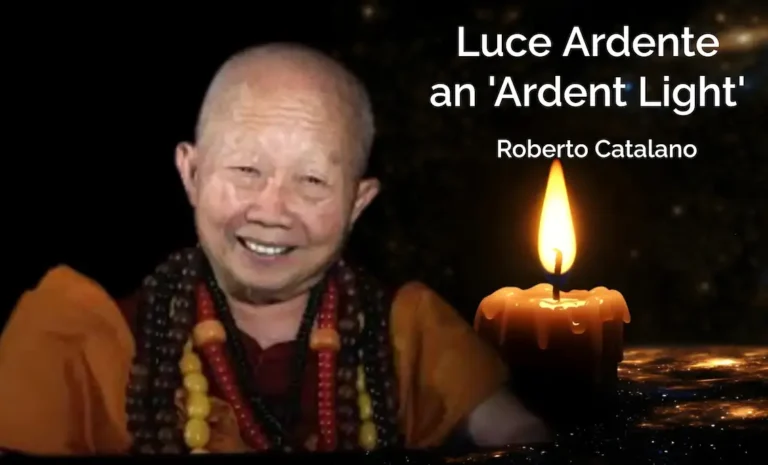
On November 10, 20026, the Buddhist monk Phramaha Thongratana Tavor, known to many as Luce Ardente (‘Ardent Light’), died near Bangkok in Thailand. Following the 1995 World Youth Day in Manila, he encountered Chiara Lubich and the Focolare Movement. A deep spiritual relationship was born that extended to many other monks of Thai Theravada Buddhism and made this little monk a privileged witness of Buddhist compassion and universal fraternity.
Roberto Catalano
The author reflects on the recent apostolic letter A Fidelity That Generates the Future.
She is a consecrated member of the Servidoras, a member of the Dicastery for Bishops, and the Ordinary Council of the General Secretariat of the Synod.
María Lía Zervino

RELEASE DATE
First published in December 2018, Ekklesía reflects the merger of two former publications, “Charisms in Unity” (1990) and “Gen’s” magazine of ecclesial life (1971).
READERSHIP
People working in all types of pastoral ministry; members of religious congregations and ecclesial communities; persons involved in parish and diocesan activities; leaders and members of movements or associations; those serving on the peripheries or in dialogue initiatives; anyone interested in the journey of the Church in today’s multi-religious, multicultural society.
EDITORIAL BOARD
Hubertus Blaumeiser (editor), Carlos García Andrade, Renzo Beghini, Patrizia Bertoncello, Enrique Cambón, Maria do Sameiro Freitas, Oreste Paliotti.
Secretary: Michele Gatta.
ENGLISH LANGUAGE VERSION
Editors: Susan Kopp and Vincent Lockhart
www.ekklesiaonline.org
Contact: admin@ekklesiaonline.org