

focus | Church thinking
An integral part of pastoral care
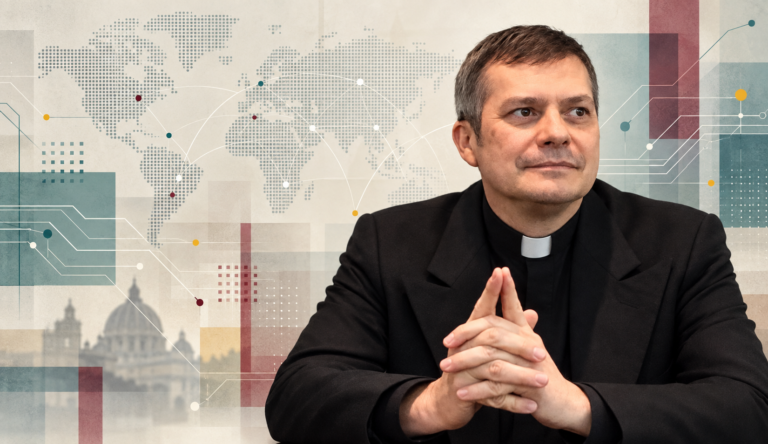
“Digital culture has its own languages, times and dynamics. If the Church does not learn to inhabit them, the Gospel risks becoming distant or incomprehensible. It is not just a matter of using social networks or adapting content, but of assuming a true missionary and relational logic, one capable of dialoguing with people where they live and in how they express themselves.” This is the thinking of the Secretary of the Vatican Dicastery for Communication says in this interview that, as a complement to ordinary pastoral ministry, the aim is to make the Internet a place of encounter, especially for those who experience loneliness and suffering and for those who have no other contact with the Church.
Q: What was the impetus behind this Digital Synod and how was this experience?
The Digital Synod initiative was born spontaneously and naturally from the People of God themselves. When Pope Francis convened the Synod on synodality, with the aim of “listening to the whole Church,” many of those evangelizing in digital realms responded by proposing to go out and listen on social networks. Thus, we can say that it came to life in this way, from underneath, from hearing the People of God.
It was a matter of applying Pope Francis’ principle: to be an “outward focused Church” and to go to the existential peripheries, acknowledging the fact that these peripheries are also found in digital networks. From the beginning, in fact, there was an awareness that it was not simply a matter of “using technological tools”, but of considering the digital as a human space, a culture and, therefore, a missionary realm. There are people, many people, who are looking for meaning, questioning themselves about God, and needing to be heard.
Many have been evangelizing and accompanying people going through moments of pain or loneliness for years. Even if the Church was not yet fully aware, the Spirit was preparing this path, which today finds an important expression in the Synod on synodality and the work of the Synodal Reflection Group Three, on mission in digital culture.
The journey now continues in the life of local Churches, in the Bishops’ Conferences and in many places that are developing digital pastoral care through various initiatives for formation and accompaniment, and in sustaining and integrating digital missionaries more and more into ecclesial communities, into diocesan life.
Q: How do you see the significance of the Jubilee of digital missionaries and Catholic influencers held in July 2025?
The Jubilee of digital missionaries and Catholic influencers was an important ecclesial and spiritual moment. It was intended to be Mother Church embracing all those present on-site, for those following online, and for everyone in general. In this way, each one would feel that they were not alone.
The first thing that was said to the participants was: “Thank you” for the mission being carried out; secondly, they were asked to live in communion and unity, to walk with their pastors, to form themselves, and remember that evangelization is the mission of the Church in communion. The Lord is at the center, and his full presence is our joy. Many had evangelized for years on social networks. So, for this reason it was necessary to make them feel like a family that needed one another, a body that is Christ’s, and it needs to be safeguarded together.
In Rome they experienced that the Church recognizes them, listens, and accompanies them. It was very powerful to perceive that sense of communion and fraternity between people of different cultures, languages and charisms, but united by the same desire to proclaim Christ. The Jubilee showed that the digital world must be understood as a human and cultural environment in which people live, suffer, seek and love. There too the Church is called to “become a Samaritan”, to listen and to build bridges.
Pope Leo XIV asked the digital missionaries to “seek the suffering flesh of Christ” even in digital spaces and “repair the networks”, transforming them into places of encounter, fraternity and hope. He recalled that it is not just a matter of producing content, but of meeting hearts and building networks of relationships.
This is why I think the Jubilee of digital missionaries and Catholic influencers has helped to move from isolated initiatives to a more mature ecclesial awareness of the digital mission. If the Synod on synodality had already taken important steps in this ecclesial and magisterial discernment, the Jubilee helped make it visible and concrete in a real experience of universal Church, communion, and missionary outreach. It gave a great impetus to dioceses and Bishops’ Conferences around the world, which are beginning to develop their own paths.
Q: You spoke of how this path has been achieved at a global level. What developments exist today for a digital, missionary presence at a diocesan and parish level?
Even today, digital technology in the Church is often used only to disseminate information or broadcast celebrations online, without fully assuming that it is also a real space for evangelization. Pastoral digitization – that is, bringing into a digital format what we already do in person – is necessary and positive, but not enough.
The great challenge is moving from a merely technological vision to a truly missionary perspective. There is need for a perspective capable of rethinking the language, time, and encounters that characterize digital culture, one that looks above all at people outside our visible communities but who are searching, often without knowing, for hope and meaning.
In this journey, many dioceses and parishes are already starting to take concrete steps. The Third Synodal Reflection Group on Mission in Digital Culture insists on the need to train and accompany digital missionaries, create networks in communion with local Churches, develop safe digital spaces, and strengthen a “Samaritan mission” capable of listening, welcoming and accompanying those experiencing loneliness, suffering or exclusion.
The digital mission cannot remain isolated or limited to technical aspects. It must be organically integrated into the Church’s pastoral life, with a formation that is also theological, pastoral and synodal, one that always generates links between online life and community life.
Q: If the digital mission is not only technical, but also a cultural and pastoral mission, what does this signify relative to the formation of priests, pastoral staff, and digital missionaries?
The Church must always be missionary in every time and place, from the parish to the most distant peripheries. She is called to go out to encounter those who suffer, seek meaning or remain far from our communities. We are all missionaries through baptism, but mission is concretized according to the needs of real people: like the Good Samaritan or the disciples at Emmaus. Mission is born from encounter and becomes a service, closeness and caress of God for every person.
This opens us up to the digital environment’s mission. Digital culture has its own languages, times and dynamics. If the Church does not learn to inhabit them, the Gospel risks becoming distant or incomprehensible. It is not only a question of using social networks or adapting content, but of assuming a true missionary and relational logic, one capable of dialoguing with people where they live and express themselves.
For this reason, digital mission is not separate, but runs through our homilies, catechesis and all our pastoral activity. We must ask ourselves if those listening to us truly understand us.
It involves a great training challenge. It is not enough to teach digital tools. It is necessary to form missionary disciples capable of proclaiming the Gospel with language, sensitivity and closeness. The Final Group Three Report emphasizes this: formation must be integral – technical, theological, pastoral and spiritual – and not only for some specialists, but for the whole Church, because we all inhabit this digital culture.
Missionary work in these networks is a further step, and many times constitutes a “first proclamation” that reaches people who would never enter a parish church. But precisely for this reason it also needs communities and structures capable of welcoming, accompanying and integrating those who arrive from these new and “distant lands”.
Q: What are the risks of a commitment in this realm and the precautions to be taken?
To begin with, there are the risks inherent in digital environments themselves: polarization, disinformation, manipulation tactics, individualism and algorithms that generate isolation and aggression. Even within the Church we can fall into division, opposition, or the search for a protagonism that ends up weakening the Gospel witness.
Thus, the first thing to keep in mind is that mission is lived in the Church, in relationship with pastors and the community, with all that this entails. This is what guarantees that we can achieve what Jesus asks of us.
Another very common risk is to consider what is digital as only a tool. Instead, we must take it as a culture, enter its dynamics, and accompany those who inhabit these spaces. I have seen many digital missionaries continue this journey in communion, because they have been listened to, accompanied, respected and even corrected when necessary. If the Church accompanies them, they can become true pastors for many, and those who seek meaning in social networks.
For this reason, we must be careful not to reduce digital mission to the production of religious content. We need to understand it as a human, prophetic presence that fosters encounter, dialogue and human dignity.
In priestly and pastoral formation, we must avoid responses based solely on control or prohibition. The important thing is to educate the heart, forming free and mature people capable of responsibly discerning their own presence and mission in digital environments. Thus, healthy environments are needed, ones rich in humanity where there is accompaniment, listening and closeness, rather than a merely disciplinary logic or formal supervision. It needs to be true formation in freedom before God.
Another important aspect is to prevent the Message from becoming confused in the enculturation process. It is necessary to adapt language in order to be understood, but in this process the Message cannot be lost or confused. It is important to remember that we must reach those who seek God, not offer entertainment. In reaching those who suffer, it is not a presentation of oneself and one’s ideas.
Ultimately, the digital mission is part of the pastoral and missionary conversion to which the Holy Spirit is calling the Church. It is a call to inhabit this culture with communion and charity, so that spaces for listening, encounter and hope can be born there, too.
We are in a new culture, and we are therefore called to a new mission, so that the message of the Risen Lord may continue to proclaim in the hearts of the men and women today: “Peace be with you!”
with Hubertus Blaumeiser

PDF version
Humans in a digital revolution
April to June 2026
No 31 – 2026/2