
focus | Church thinking
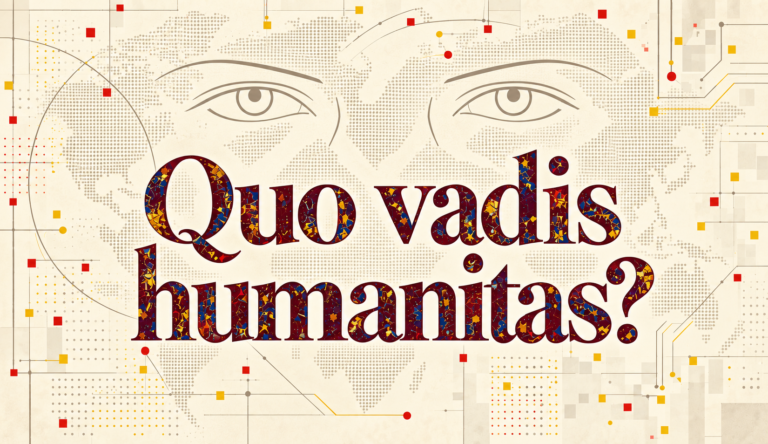
“In the face of unprecedented technological acceleration, theology attempts to outline the boundaries of the future of human beings. Between the dream of technological immortality and the risk of cultural amnesia, the new document of the International Theological Commission (ITC) proposes a ‘vocational or responsive anthropology’ to save the integral human.” With this initial script, the site www.vatican.va offers this presentation of the recent International Theological Commission document.
“What is a human being?” Perhaps, this question in Psalm 8 has never before been so timely and dramatic. The International Theological Commission has approved a document entitled, Quo vadis, humanitas? which aims to accompany navigation through the troubled waters of the twenty-first century. Sixty years after Gaudium et Spes, theology does not limit itself to observing technological development, but questions the very nature of the human being in the face of scenarios that until a few years ago belonged to science fiction. In fact, the affirmation of the Second Vatican Council resonates today: “The truth is that only in the mystery of the incarnate Word does the mystery of man take on light. ” (Gaudium et Spes, 22).
1. The ambivalence of technological development: between greatness and fragility
The starting point of the analysis is the observation of a paradox: humanity today experiences a technological push that enhances an almost divine potential, yet it has never been so aware of its fragility. The Covid-19 pandemic, global wars, and the climate crisis have laid bare a limit that technology cannot erase.
This document warns that this ambivalence cannot be simplified. Exalting only blind force in the search for new technological means implies ignoring the reality of limits. And on the other hand, it resigns us to a finitude that implies a forgetting of our spiritual nature that is always open to something more. To be human is a free gift and a task that makes human life an adventure to be played out in freedom and in relationship with other brothers and sisters.
2. Critical judgment on the “new myths”: Transhumanism and Posthumanism
One of the Document’s key components is a critical discernment of two currents of thought that are beginning to shape the collective imagination:
Theology opposes these visions with Dante’s concept of “transumanar”: a human overcoming that is not the result of strengthening techniques, but a historical journey with the gift of grace in union with God and for the good of all our brothers and sisters.
3. Artificial Intelligence: not just a tool, but an environment
The document analyzes the impact of the digital revolution driven by Artificial Intelligence (AI). AI is no longer just a tool in the hands of human beings but has become a real “living environment” that conditions the way we think and relate.
The consequences are profound on four levels:
4. Risk of cultural amnesia and the “Urban Age”
A danger sign concerns the loss of the sense of history. Digital culture tends to dissolve memory, transforming life into a “present closed in on itself.” Without memory, the human being loses his identity and becomes the object of unlimited experiments.
Added to this is the challenge of the megacities. We live in the “Urban Age,” where more than half of the world’s population lives in cities that are often soulless, marking the definitive transition from rural culture to media and information technology.
5. The Theological Proposal: Human Identity as a “Vocational Anthropology”
What humanity really needs is not an evolutionary leap, but a relationship that saves and gives meaning to the full realization of each person. Salvation in Christ does not replace the human: it respects and transforms it, taking it up, purifying it and recreating it. It is not a question of accelerating development towards new forms of life, but of accompanying the journey of peoples by offering a horizon and a meaning that will allow each one to discover his or her own vocation as sons and daughters of God, in universal brotherhood and in harmony with nature. On the contrary, the promises of transhumanism and posthumanism, which claim to simplify the tensions of human experience, turn out, on closer inspection, to be dehumanizing.
To respond to these challenges, the document proposes a positive paradigm shift: emphasizing the responsive character, in dialogue with others and with God, of human experience, in the context of a situated anthropocentrism. Precisely by virtue of the dialogue between the human being and God from the moment of creation, people are not called to exercise absolute dominion over the world, but to recognize the central value of the human being as a “responsible steward” inserted into the symphony of all other creatures. The main categories of this vision are:
Conclusion: True Humanization
The document closes by emphasizing the hope linked to the mystery of the risen Christ and the figure of Mary, seen as the paradigm of a human being completely fulfilled through the free acceptance of God’s gift, rather than through self-empowerment.
The challenge put forward by the International Theological Commission (ITC) is clear: humanity’s future is not decided in bioengineering laboratories, but in the capacity to engage with the tensions of the present while maintaining a sense of boundaries and openness to the Mystery. “True humanization” corresponds to a willingness to allow ourselves to be “divinized” by a Love that precedes us and makes us protagonists of a new humanity.
Finally, we turn our gaze to the poorest and most defenseless, who are the ones who run the greatest risks in the face of growing technological power and Promethean dreams of transhumanism and posthumanism. They risk becoming ‘collateral damage,’ swept away without mercy.

PDF version
Humans in a digital revolution
April to June 2026
No 31 – 2026/2