
focus | witness
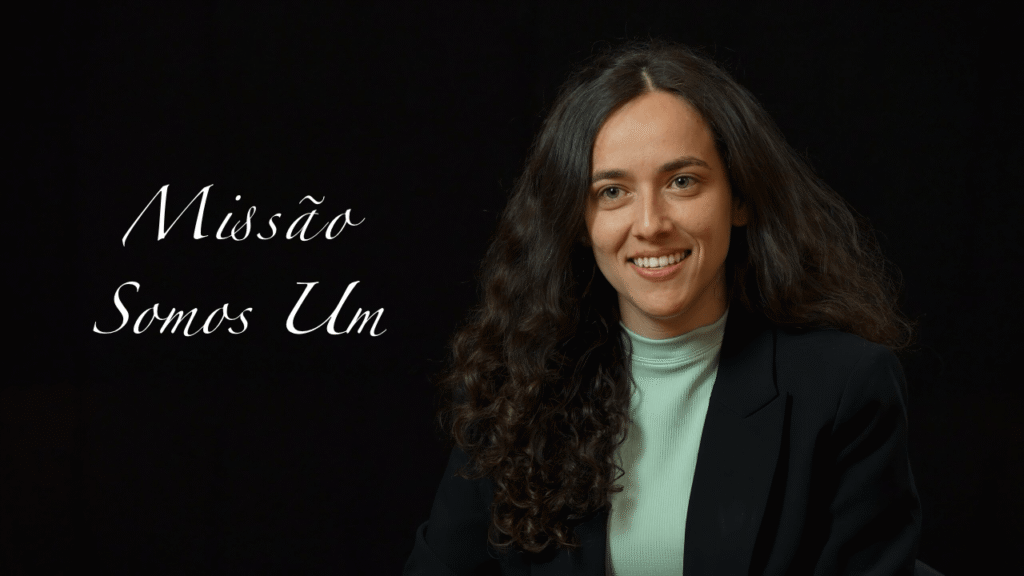
The Somos Um Mission in Brazil
Mayara Pazeto
A young woman rereads her own past sufferings, making them the object of theological reflection. Hence the understanding that disunity, just as it causes lacerations and suffering in a family, creates pain even between separated Churches. In the light of personal experience, the author speaks of the Somos Um Mission, dedicated to dialogue between the Pentecostal Church and the Catholic Church. She reflects on the similarities that pass between the history of every Christian and the history of Christianity: errors, misunderstandings and divisions but all of which cannot extinguish hope.
In sharing here, I would like to first lay a foundation: What is a sign? And what is hope? I like the way in which the Gospel according to John elaborates the idea of the sign, using the central concept of signum: to indicate a reality greater than what it represents. The Pauline perspective of Rom 5:3-5 fosters an understanding of hope: “And not only that, but we also boast in our sufferings, knowing that suffering produces endurance, and endurance produces character, and character produces hope, and hope does not disappoint us, because God’s love has been poured into our hearts through the Holy Spirit that has been given to us.”
In this context, glimpsing hope presupposes a path of suffering to be embraced. Those who do not embrace the suffering inherent in following Jesus cannot truly taste the hope that he gives. This embrace, however, is what generates endurance in us and makes us understand that things and people are not under our control, placing us in front of what I call the dilemma of hope: the measure of endurance is reflected in the experience, and on this depends whether it will be positive or negative.
Further on, Rom 8:24-25 continues: “For in hope we were saved. Now hope that is seen is not hope. For who hopes for what is seen? But if we hope for what we do not see, we wait for it with patience.” Again, patience is linked to hope, with an aggravating circumstance: you have to wait for what you don’t see. This is hope: the ardent expectation of what we have not yet contemplated, in the midst of the tribulation that must be lived in an experience of patience. Having said this, I propose a path by which every pilgrim of hope must be willing to follow, thus becoming a sign. It is a path of suffering, endurance, character, and hope. And these were the steps that led me to encounter the work of Somos Um (“We are One”) Mission.
Step One: Suffering (Tribulation)
This is that act of compression or of squeezing, which has oppression and anguish as its metaphorical meaning.
This step began in my childhood from a family context of division. I was born from my father’s adultery and remained hidden for a long time, experiencing temporary abandonment by my father as a child. In my father’s family, no one knew of my existence. In my mother’s family no one knew who my father was. Thus, my own story was obscure to me and appeared to be a big lie. What I didn’t imagine was that Jesus would begin a process of radical conversion in my father’s life, leading him to become a Pentecostal pastor. As for me, I began attending the Catholic Church as a child, of my own free will. No one invited me. However, something very strong inside me told me that there was a family there, but not yet my home.
Second step: endurance (patience)
Literally, the ability to be stable, constant, and tolerant. This is what it means to act patiently.
For ten years I embodied this truth, waiting to meet my father. At this point in his life, he had already become an evangelical pastor who continued guarding this past life secret. It could have been a very good reason for me to distance myself from the Church in some way. However, this was not the case.
Faced with the experience of abandonment, I could not help but wonder about that Love that, even in the face of a daughter’s pain, had reached my father. Sometimes I asked myself: “What kind of love can ever overcome the pain I feel?” I discovered it when I was 16. On a graduation cruise, I had an experience of God. One night, sitting on the deck of the ship, the Lord’s voice spoke clearly to my heart: “You were not born to do what your friends do, Mayara, you are mine.” After what happened there, I became an ardent young Pentecostal.
Third step: character (experience)
The meaning of this can be translated as a trial, as learning through difficulties or the experience that leads to having a tempered character.
This third step was decisive. At 19, I enrolled in the Pontifical Catholic University of São Paulo to study theology. In a miraculous story, one that only the Spirit is capable of building, I became president of the Academic Center and the Commission of theology students for the State of São Paulo. I grew close to seminarians, had contacts with many dioceses and religious orders and, in my house, the presence of priests became common. At first, my mother joked, “I never imagined that there would be so many priests in my house, Mayara.” And I would never have imagined it either.
In 2019, I received a message on behalf of Pope Francis, granting an Apostolic Blessing for a theological congress I was organizing. I confess that I found it very strange how easily things happened. Simultaneously, I received many invitations to preach retreats and offer biblical formation on Mary, another atypical thing, as a Pentecostal. In light of this, the priests at the university were the first to tell me that they perceived a clear gift in my life.
Because of this experience, I decided to write my final thesis on Christian unity. When I started reflecting, a number of events led me to reflect on my family history. I went through a profound process of forgiveness and reconciliation. It happened like this: while I forgave, I wrote. In every moment, my memory reminded me of how much a divided family could cause suffering. But it was in those same moments that the Lord asked me: “What about my family, the Church?” It was necessary to unite my abandonment to that of Jesus.
In this context, my supervisor said to me: “Make your life theology, Mayara.” A great but challenging tip, after all… It is easy to make a theology of history, but it is difficult to make your own history one of theology. Starting from the shared patrimony of Sacred Scripture, I concluded this painful stage by writing on the theme: The Spirit and the Bride say: Come! The figure of the Bride as a prophetic response to the unity of the Church. It was this step that led me to Catholic-Pentecostal dialogue, to the Commission for Unity of the Catholic Charismatic Renewal Movement of São Paulo, and to Somos Um Mission.
Fourth step: hope
The expectation of goodness is what Somos Um Mission represents in my journey. Founded by lay people in the context of a Catholic community (Coração Novo near Rio de Janeiro), it is based on a letter signed by Catholic and evangelical leaders who pursue a common purpose. The letter rests on four pillars that express the essence of what we believe: respect for confessional identities, ecclesiality, non-proselytism, and unity as a gift of the Holy Spirit. The development of these principles ended up generating a law in Rio de Janeiro; that is, there is a week in the official city calendar, called Somos Um Week. For this reason, we were surprised to receive Cultural and Intangible Heritage recognition.
Practically, Somos Um Mission brings together Catholic and evangelical leaders with charismatic-Pentecostal experience in a common purpose: to proclaim Christian unity. For this proclamation, however, some discernments were necessary. These included friendship as the constitutive basis of every action; local, national and international fraternal councils; work with youth, and a theological dialogue that responds pastorally to our needs. The fraternal councils are composed of sensitive participants, ready to discern in a fraternal atmosphere the promptings of the Spirit regarding unity.
With the establishment of a Catholic-Pentecostal Working Group at the national level, a door opened for theological dialogue aimed at theological reflection, and pastorally on the charismatic-Pentecostal experience. It serves in the understanding and discernment of specific experiences and initiatives of the Churches and Communities, starting from the Latin American reality. We recently published our first report, fruit of our meetings, which has as its theme, the gifts of the Holy Spirit. The most recent discernment came in 2022, with the Somos Um Youth Mission, a group that engages my whole heart and my service.
For these reasons, I consider Somos Um Mission to be a sign of hope. Firstly, because of the communion I have lived in, and secondly, because my own personal history is undoubtedly intertwined with it. In starting from the “foundation of hope”, this sign is not manifested in what we have already achieved, since what is visible can no longer be the subject of hope. Hope is not acting on what we have already built, but on what is yet to come as a grace of the Spirit.
Called to be “Pilgrims of hope”, I will conclude by sharing something my father says when he tells the story of our family. He repeats countless times that it was generated amid pain and wounds but flooded with God’s infinite love: “Suffering (Tribulation) has become a vocation”. When he glimpses this reality, he concludes by quoting Rom 5:20:”…[B]ut where sin increased, grace abounded all the more”.
Paraphrasing this biblical text as we commemorate the 1700th anniversary of Nicaea this year, I have the courage to think that in the midst of so many abundant wounds throughout the history of the Church, God certainly makes his hope abound.

PDF version
Called to Hope – Key players of Dialogue
July to September 2025
No 28 – 2025/3
