
focus | insights
Digital technologies and artificial intelligence
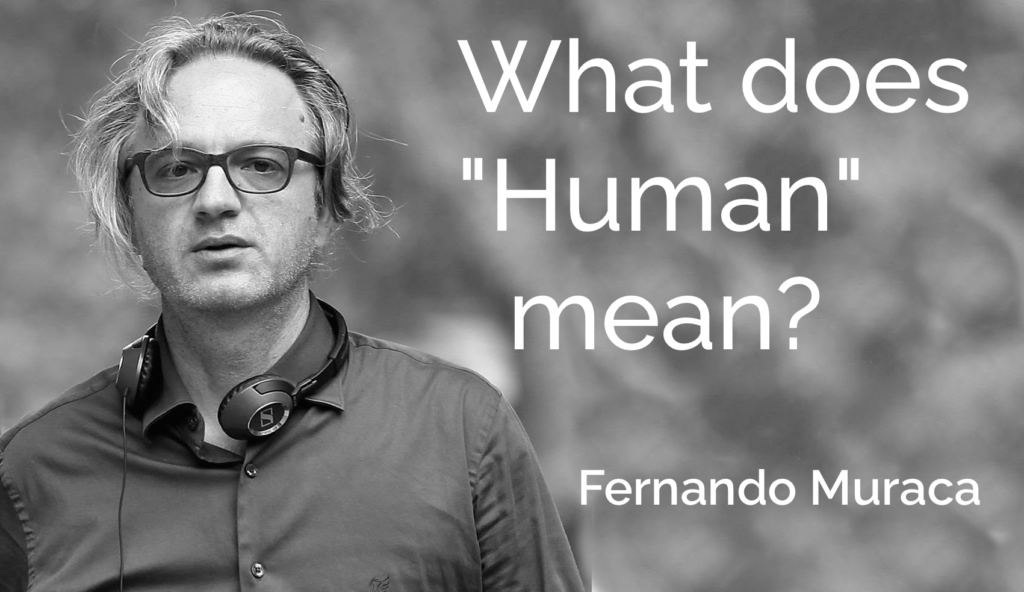
Fernando Muraca guides us in a time when the anthropological implications of social media and artificial intelligence bring us to peer, in a certain sense, “behind the scenes”. In fact, there are two seemingly important concerns: The first is not to be afraid of what we are discovering, and the second is not to fear submitting it to discernment.
The author has created fiction for cinema, documentaries and TV series as a director. In recent years he has published several novels and essays, including the volume Freely Veronica. My 30 days without social media.
More than 126 years ago, the German philosopher, Georg Simmel, wrote the following, that remains a crucial reminder of what we are experiencing in our world today:
The machine has become more “spiritual” than the worker. […] How many workers, even within large industries, understand the machines they work with, or the spirit invested in that same machine? […] Objectively available knowledge allows (or rather imposes) expressions of that knowledge in what are seemingly passed on like sealed containers, without the individual user ever becoming aware of the intellectual content they actually hold.1
A hidden and unknown language
Andrea Granelli, one of the experts involved in the launch of the internet in Italy, warns that we live in a time in which “knowledge remains external, artificial, and ‘other'”2. Today, we find ourselves in a similar situation to that of the time before universal basic education, when information access was possible only for a select few, educated people.
The unknown language that allows today’s machines, smartphones, and consumer tools to function, is one with which most of us are unable to interact. Basically, as we move our finger around the screen (user interface) of our cell phones, what we see has passed through a filter, a technical idiom acting through the instrument tool chips that we are using. It is similar to priests who used to turn their back and read in Latin those elements that people can learn only through subsequent translation.
Power belongs to those who control algorithms
The “power of translation” is an important issue to explore, because it is capable of arriving to the point of manipulation, as has happened in recent years. A small number of people, led by executives resistant to any form of regulatory oversight, control the code and the algorithms.
It is as if one day food safety inspectors arrived at a restaurant and a business owner prevented them from entering the kitchen by saying: “I’m sorry, you can’t enter due to the secret recipes”. Or it is as if financial authorities were auditing a company and the entrepreneur refused to hand over the accounts, replying: “I’m sorry, our business accounts are secret”.
While the evolving opacity of computer systems on the one hand simplifies their use for an expanding number of potential users, on the other it serves to hide the mechanisms that make users increasingly dependent on machines. By maintaining such interfaces, software designers can change the way the user interacts, without the user noticing3.
We have equipped ourselves with watch dogs to prevent harmful abuses that would allow a person to take possession of common goods or of public health. But we have not yet been able to apply this wise and prudent attitude to those manipulating our data, to those who govern the algorithms that make what we use work. Such a lack of regulation has been due to intense pressure and lobbying at the level of the US government.
Lack of control
Attempts to mitigate the power of New Media oligarchies ran aground in the last decade. Europe has taken a different path that is continually threatened by serious retaliation from North American economic and political elites. Citizens of the “old continent” are asked not to introduce regulations that would limit these manipulative powers. But can we comply with these requests given the serious disorders and addictions of new generations that are arising due to social media? We are inundated by rivers of information and immersed in a global entertainment society: “How can we forget the famous ‘corollary’ of Don Giovanni: “The greater the conquests, the less we love.” Likewise, the more “information” available, the less we know.4
Creating a new “self” fragmented between reality and virtuality
When Andrea Granelli wrote The Digital Self, in 2006, two years prior to Facebook’s Italian arrival, in 2008, it was impossible to imagine then that in just over a decade, artificial intelligence would begin its integration into every aspect, although at the time there were no technologies capable of processing the necessary amounts of data quickly and consistently. Yet, despite this, Granelli prophetically uttered:
As the increasing pervasiveness of these technologies in our daily lives, and considering that their action is not limited to a specific mental faculty but rather tends to involve all of them, these innovations will increasingly impact not only specific enhancements of some faculties, but they will create a new “enhanced self”, located in the network. It will involve a fusion of these technologies in our body5.
I had become aware of these things empirically, even before recently reading Granelli’s book. In 2019, I wrote a children’s novel, Freely Veronica6, the story of a teenager who decides to experiment with living without social media for one month, to see what life is like without this pervasive presence of communications. In the book I wrote from the experience lived with my three children, who were teenagers just as Instagram and TikTok exploded on the social media scene. I had invented with them a set of guardrails to “save their skin” and they asked me to write something for their friends who were “getting lost” in endless consumption of digital content.
Immediately afterwards and until today, I have met with thousands of Italian school students to invite them to repeat the same experiment as the book’s protagonists: living a month without social media. More than a hundred accepted this daring challenge and shared a diary of their experience. Through personal relationships and their writings I realized that a part of their Self and their relationality was no longer in the real, but was now in the virtual. When we ask adolescents to turn off their mobile phones, we are not only imposing detachment from a tool, but it is a request to put a part of their very Selves on standby, on pause. It is like living with part of their heart anesthetized, or a heart chamber frozen. At a certain point, I began pondering the implications for a person who is fragmented between the reality in which he or she communicates using familiar language, and the virtuality by which interactions are only through interfaces organized and managed by others in the rooms of Silicon Valley.
A lived reality built on other’s interests
These technologies are not neutral. You cannot apply the commonly heard phrase: “it depends on how you use them”. They are designed to entertain and, as much as possible, extract from our choices the needed tools (behavioral data) to keep us in a bubble of doing repetitive things in order to prevent us from authentically evolving through relational and cultural experiences. If we evolve, we are no longer predictable and our consumption behaviors escape predictive powers that can monetize them.
Since facts have turned into representations of facts, everyone can have his or her own. If the world, mediated by screens, shows us representations of facts and words, it can exhaust our experience of reality. What passes across the screen is a partial reality, is it is not neutral nor random (which would be far preferable). Rather, it is selectively preordained and designed […].
And therefore this visual reality is a reality constructed by someone who has an interest in us seeing exactly that specific reality, and not another7.
By consenting to use of an app (and sometimes without consent) we allow for the data collection that enables this worrying scenario described above to happen. “Tomorrow’s encyclopedias are databases. They exceed the capacity of each user and represent the nature of postmodern humanity”8. This 1979 statement by Lyotard foreshadowed today’s experience, with its predictable effects that we should have better controlled. Because this involves “a fusion of these technologies with our body”, we need to regain a vigilant attitude, because possible mutations are about to occur in our “state of being” that we now define as “human”.
Symbiosis between human brains and Artificial Intelligence
In 2024, Elon Musk’s startup, Neuralink, performed the first successful surgery to implant a N19 chip in a man’s brain to create a brain-machine interface capable of revolutionizing treatment of various neurological diseases. The experimentation marks important progress and it is foreseeable that the disabled will be able to write and become mobile in the future, thanks to this technology. But, once human-machine interactions are fine-tuned, why shouldn’t others without disabilities use it? It is no coincidence that Elon Musk has said that the purpose of these neurotechnologies is to achieve a symbiosis between the human brain and artificial intelligence.
Since none of this is regulated, everything proceeds under commercial pressure. In America there are already companies selling neuro-controlled objects. Samsung and other big tech companies, for example, are already studying how to free our hands from writing messages, using only our thoughts. It is not coincidental that AI ethicist Marcello Ienca concludes a recent, important essay on the subject in this way:
“As neurotechnology becomes more socially pervasive and computationally powerful, it is increasingly urgent and necessary to prepare the ethical ground and chart a course for science and policy. The line between human cognition and artificial intelligence is becoming increasingly thin and blurred. And it is unclear whether our society is ready for such a transformation”.10
If we were to project ourselves into the near future (a decade) and imagine two people talking in a movie. One person has implanted microscopic chips allowing him to access the internet and all knowledge, while the other still lacks these chips. Are both of them “people” in the same way? What is the nature of the person with incorporated technologies and immeasurably expanded information access? Can the notions he or she draws upon be penetrated and screened by one’s conscience or “reflected upon”, so as to allowing for freely made decisions and actions? Will this person still be a man (or woman) as we understand homo sapiens today?
In ten years’ time, what will it be like to teach catechism to a composite group of children in which wealthy children may have this cutting-edge technology implanted, while the others will not? What will it mean in this scenario to transmit the faith, grasp the sense of the Mystery, or be in a mission of service as Christ’s followers?
Recent reflections in the ecclesial sphere
In the recent document, Quo vadis, humanitas? (Where are you going, humanity?), the International Theological Commission raises profound questions about the transformative meaning of high-tech industrial products that act at the very root of existence and humankind’s position with respect to creation itself:
Humanity’s future is not decided in bioengineering laboratories, but in the ability to inhabit the tensions of the present without losing the sense of limit and openness to Mystery. “True humanization” coincides with the willingness to allow ourselves to be “divinized” by a Love that precedes us and makes us protagonists of a new humanity. We turn our gaze to the poorest and most defenseless, who are the ones at greatest risk in the face of growing technological power and the Promethean dreams of transhumanism and posthumanism. They risk becoming “collateral damage”, mercilessly wiped out.
Conscious, proactive spokespersons for a universal, human future
How can we be proactive? Two attitudes seem important: a) Do not fear what we are discovering and b) Do not be afraid to subject it to discernment. In this way, our choices will not become random or emotional ones. Instead our choices will result from actions subjected to conscience, and not greed or a desire for power:
As Karl Popper said, […]
“The future is open.” But openness signifies not only uncertainty, but also opportunity. It can be an opportunity for all, not just for some. This is why it is important that society does not hesitate at this crossroad, but rather that we reflect rationally, collectively and farsightedly on the right path to take. The future of ‘intelligence’, at the end of the day, will depend on our intelligence11.
An anthropological rather than a technological perspective must […] guide digital designers, as well as the users of these applications, who are no longer simply operating controls but consciously shaping parts of themselves.12.
We must be conscious spokespersons for such proactive events at every level of responsibility, both in the public square and within “families”, so as to help build a dignified future open to Mystery and one worthy of being lived.
________________________________________
1 G. Simmel, The advancement of the culture of things and the backwardness of the culture of people, in
Philosophy of Money, Chapter VI, paragraph II, Utet, Novara 2013.
2 A. Granelli, The digital self. Identity, memory, in the era of the network, Guerini and associates, Milan 2006, p. 25.
3 Ibid., p. 194.
4 Ibid., p. 44.
5 Ibid., p. 70.
6 F. Muraca, Libera Veronica. My 30 days without social media, Città Nuova, Rome 2019.
7 L. Perilli, Artificial Consciousness. How machines think and transform human experience, Il saggiatore, Milan 2025, p. 44.
8 J.F. Lyotard, The Postmodern Condition. Report on Knowledge, Feltrinelli, Milan 2014.
9 In 2026, the Italian start-up Corticale will install its SinapS device on the first patient, which is much more powerful than Elon Musk’s N1 chip and will be able to make the prostheses of people without legs and limbs move until they regain the sensation of touch. The main difference lies in the ability of SinapS to acquire neural activity with a much higher number of sensors and with a single probe, reducing the invasiveness and risks associated with implants.
10 M. Ienza, Intelligence². For a union of natural and artificial intelligence, Rosenberg & Sellier, Turin 2021.
11 M. Ienza, Intelligenza², cit.
12 A. Granelli, The Digital Self, cit., p. 214.

PDF version
Humans in a digital revolution
April to June 2026
No 31 – 2026/2