
focus | witness
New practices in a Synodal and Missionary Church
Today's Placesof Mission
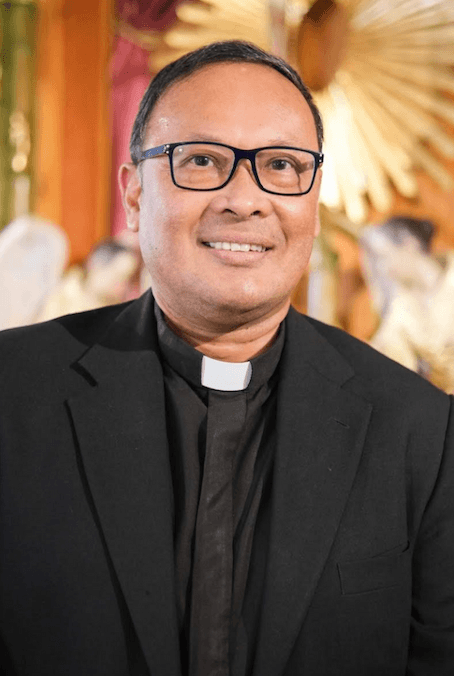
Andrew Giménez Recepción
Professor Andrew Giménez Recepción, a lecturer in missiology at the Pontifical Gregorian University, reflects on how the Final Document of the Synod on Synodality emphasizes the need to rethink the meaning of the “local Church” in the light of the cultural and social changes which have taken place in contemporary society (n. 114). This calls for a renewed understanding of the “place” of mission as the multifaceted historical reality in which human experience unfolds (n. 114).
The Places of Mission in a Synodal Church
The Final Document of the Synod on Synodality responds to today’s experience of place and space by speaking of the Church as a “home” (n. 115). The image of a home—or better still, of a “dwelling”—evokes a place of welcome, hospitality and inclusion, rather than a closed, protected space inaccessible to others. To speak of the places of mission, therefore, is to speak of an inclusive space that, in perspective, embraces all creation and every creature.
The Church must be understood as a welcoming community and not merely as a building; as a sacrament of encounter and salvation, rather than simply a place of worship or of various activities; as a school of communion, rather than an office concerned with religious affairs (n. 115).
It should also be emphasised that mission is not confined to specific places, but is a universal call realised in every sphere of human life, where the Church is called to bring the light of the Gospel. Synodality deepens this vision by placing emphasis on the involvement of all the faithful in discerning and carrying out this mission.
Thus new “places” emerge, which go beyond traditional categories. Whereas in the past the places of mission were often understood as territories assigned to missionaries, today we speak of places of mission not so much as geographical spaces, but as human spaces where mission becomes present and transforms reality with the values of the Gospel.
In this light, let us revisit some of the key places of mission in today’s world.
Geographical Peripheries
When we speak of “geographical peripheries”, we refer to remote, neglected or marginalised regions. Many missionaries carry out their evangelising work in such places, often in isolated areas and in countries where Christians are in the minority. In these circumstances, the primary aim is not to build material structures, but to reach people. Mission is therefore called to focus on forming communities rooted in Gospel values, giving priority to relationships and solidarity.
Synodality in these contexts means working together in apostolic synergy, where people become protagonists by sharing gifts and resources. This allows mission to be lived not as a strategy of conquest or occupation, but as a gradual process of transforming lives and communities in Christ, through the Gospel, by word and witness.
Existential Peripheries
The term “existential peripheries” refers to places where people live in situations of poverty, exclusion, discrimination and injustice, suffering and alienation—such as prisons, refugee camps and areas affected by war or natural disasters.
The many faces of suffering humanity can be considered existential peripheries. In other words, the term “existential” may also be understood as “human”. What is striking is the widespread indifference of the world towards these human faces, often regarded as marginal voices, crying out for recognition and attention from those who have the power to make a difference in the lives of those on the margins.
Urban Areas
Pope Francis has emphasised that cities represent a missionary field marked by cultural and spiritual challenges, including secularisation, loneliness and inequality. Mission in cities and urban areas involves engagement with diverse communities, dialogue, and a commitment to addressing social injustices. It represents the future of evangelisation, as current migration trends indicate that by 2030 more than half of the world’s population will live in urban centres or megacities.
Rather than reaching the jungles of remote territories, the challenge of mission becomes entering the “jungles” of urban skyscrapers and reaching neighbourhoods that have become communities of strangers.
The reality of the city goes beyond physical space: it encompasses both the positive and negative aspects of humanity’s search for fulfilment and happiness. It is crucial to create waves of human solidarity within the city, fostering meaningful interactions and mutual support, especially in areas most in need of the transforming power of the Gospel.
Family and the Home
The synodal process highlights the role of the laity in strengthening faith within families and communities. Families must be seen as primary spaces of evangelisation and in their potential to be “domestic Churches”.
Today, more than in the past, family life is in crisis due to the social and cultural upheavals that challenge traditional forms of family. Alongside the usual difficulties of building families open to life and faith, there are subtle and insidious attacks on family values that prioritise economic well-being above all else, placing pressure on fertility and on human and religious values.
It is therefore necessary to return to the fundamental unit of society and of the Church as a primary place of mission. Without families formed in faith and authentic humanity, the present and future of both Church and society are in grave danger.
Digital Spaces
The technological leap known as the digital revolution has challenged the Church to consider the internet and social media as places of mission. Responsible engagement in this sphere is required in order to proclaim the Gospel, build connections and counter misinformation.
The web is no longer merely a virtual reality but has become a real space in which people choose to live. It is therefore necessary to form digital missionaries capable of meeting people online, engaging with them and establishing meaningful connections, especially with digital natives.
Moreover, there is a need for professional formation of youth ministers and pastoral workers, integrating a renewed missionary paradigm into all contexts of formation. It is not enough to be a Church “online” that uses technology for liturgical celebrations or services; the Church must also be present “within the digital”, as a community of faith across all media platforms.
Work and Social Spheres
The social doctrine of the Church has always regarded workplaces and social spheres as spaces of mission, since they concern the human person’s effort to realise his or her dignity through work. Christians are therefore called to bear witness to the Gospel in daily life, promoting justice, ethics and solidarity in professional and social environments.
Workplaces and social spheres require the Church’s evangelising mission in order to humanise working conditions, prevent exploitation and promote a culture of work that contributes to integral human development. It must be affirmed that the human person cannot be reduced to an object of unrestrained profit but must be respected as the subject of his or her own destiny and well-being.
Interreligious and Ecumenical Dialogue
Mission also includes the promotion of peace, understanding and cooperation in the face of common challenges. In this context, there is no need to fear extending a hand to men and women of other faiths and to other Christians.
The path forward in interreligious and ecumenical dialogue is to embrace the other not as a threat, but as a companion in humanity’s shared search for life, peace, unity and solidarity.
The Environment
Mission also includes care for creation, as expressed in the encyclical Laudato si’. Pope Francis has called for ecological conversion and solidarity with the most vulnerable, who are disproportionately affected by environmental degradation.
Beyond ideological divisions, the environment must be recognised as a genuine space of mission, since it concerns not only the destruction of nature but also has a direct impact on human life, especially that of the poor.
Attention to the environment broadens the horizon of mission to embrace the whole of creation as an integral part of a missionary spirituality that sees the human person within the whole of creation, as a microcosm. In other words, true ecological conversion in mission does not begin from the outside, but from within the heart of every person who loves creation as a gift of God.
International Migration
International migration represents one of the spaces of mission, as it creates dynamic and emerging contexts in which cultural, religious and social interactions take place, offering unique opportunities for evangelisation, interreligious dialogue and human solidarity.
The vulnerability of migrants—often displaced and victims of discrimination, poverty and lack of support—makes them particularly receptive to acts of love, compassion and solidarity, which are central to mission.
Migration, with the diversity it brings to communities, becomes an opportunity to build inclusive communities in which faiths and cultures contribute to human encounter and mutual support. While it is true that life in multicultural and multireligious communities can lead to tensions, it also offers the opportunity to promote peace, mutual respect and social cooperation through shared human and Christian values.
Finally, migration contributes to a form of “reverse mission”, enabling migrants to become new missionaries in places where faith has faded. In this way, migration becomes an occasion for a universal mission that transcends borders.
Conclusion
If we take synodality seriously, we must recognise that every Christian is called to be leaven of the Gospel. It is therefore essential that each person becomes a missionary in one of the places of mission where witness to the Gospel is needed.
To walk together in mission does not necessarily mean physically walking alongside others, but rather living, as the People of God, existentially for mission within one’s state of life, one’s work, and one’s concrete context of life and service.

PDF version
In Today’s Places and Times
October to December 2025
No 29 – 2025/4