
The Church in the city: some reflections and experiences

focus | experiences
Jens-Martin Kruse
In this article, Lutheran theologian and pastor Jens-Martin Kruse reflects on the challenges facing Christianity in a society marked by religious indifference, drawing on his experience in the centre of Hamburg. Structural reforms seem to have no effect; there must be a renewed restlessness for the Gospel by “putting out into the deep” and discovering how to respond creatively to the sensitivity and needs of men and women in our time. In particular, the article focuses on the potential of churches in city centres as places where people can come into contact with a living Church that welcomes them and serves them without self-interest, thus becoming missionary.
If nothing is lacking, where is God lacking... is the title of a book, published in 2024 by theologian Jan Loffeld, on the question of Christianity and religious indifference. The title expresses in a dramatic way the challenge that the Churches of many European countries are now facing. For a growing number of people, Bible-inspired faith has no role. For many, it has become normal to live without God. According to a 2023 survey on church membership, 68 percent of Germans describe themselves as “neither religious nor spiritual” and do not feel that they are missing anything. They declare themselves neither unhappy nor disoriented. They often lead a life that fulfills them and that, in most cases, probably does not differ much from the lives of many Christians.
Is the answer to this erosion to be found in structural reform?
The consequences of this evolution are felt in all the Churches: the number of those who participate in the liturgy and those who are involved in the life of the communities is constantly decreasing. Every year hundreds of thousands leave the Christian Churches. Economic resources are greatly depleted. By now Christianity has become a minority in Germany and the Churches must learn to carry out their mission of communicating the Gospel in this changed situation. In recent decades, they have reacted to this process of external erosion with a series of reforms aimed at continuing as much as possible, albeit on a small scale, what has hitherto constituted ecclesial life. To this end, parishes are merged, the number of buildings is reduced and the numbers of staff are reduced.
Such an approach is often necessary, but these structural adjustments do not get to the heart of the current challenges nor are they the way to enable the Church to proclaim the message of the Gospel with new strength and charisma. To do this, we must ask ourselves honestly which ecclesial activities make sense from the point of view of content, and which ones are no longer fit for purpose and in need of review. Above all – as Pope Francis has emphasized – it is fundamental to understand what the mission of the Churches is: “It is easy, but ultimately pointless, to judge those who do not believe or to list the reasons for secularization. The word of God challenges us to look to ourselves. Do we feel concern and compassion for those who have not had the joy of encountering Jesus or who have lost that joy? Are we comfortable because deep down our lives go on as usual, or are we troubled by seeing so many of our brothers and sisters far from the joy of Jesus?” [1]
Restlessness for the Gospel and the Second Call
Pope Francis felt the urgency of shaking the Churches from their complacency and resignation and awakening in them a restlessness for the Gospel. He was deeply convinced – as he explained in his own interpretation of Peter’s account of the miraculous catch of fish during World Youth Day in Lisbon – that even in our day Jesus “stands at the shore of our lives, to revive our hope and to say to us, as he did to Simon and the others: “Put out into the deep water and let down your nets for a catch” (Lk 5:4). “For that is how life is: we fail and we start over, we grow weary and we find renewed joy. We put our hands into the hands of Jesus.” It is time “to open our hearts to that second call of Jesus, for he never stops calling us. He calls us to make us set out; he calls us to remake ourselves.” [2]
Although it is not possible for the moment to foresee the future form of the Church, it is nevertheless necessary to get back on track and follow Jesus’ call to go “where [the sea] is deep”, “animated by a single desire: that the Gospel may reach everyone”. The Churches must not be satisfied with the safe but shallow shores of established ecclesial life, nor act as a “customs house” towards the many who have distanced themselves: “Here you enter, the righteous, those who are all right, those who are well married, and out there all the others. No. The Church is not this. Righteous and sinners, good and bad, everyone, everyone, everyone.” With these words, Pope Francis promoted a “spirituality of new beginning” in the Churches, rooted in faith in the presence of Jesus. From this it draws strength for a new missionary outreach, allowing people in our current socio-cultural situation to encounter the Gospel of Jesus Christ.
The Church: a welcoming home and a sacrament of encounter
The daily reality of many people today is determined in particular by the phenomenon of urbanization and its consequences. For some years now, and for the first time in the history of mankind, the majority of the world’s population lives in cities. Churches are therefore faced with the task of settling into the urban context and relating to people whose lives are influenced by the increasingly complex and changing logic of urbanization. The Final Document of the 2024 Synod encouraged the Churches to face this challenge and to seek with “missionary creativity” (n. 111) new places, ways and forms that foster experiences of “welcome, hospitality and inclusion” through the Churches and in the Churches. This approach is to be addressed to those who have until now had little or no contact with the Churches, as well as to those who are closely linked to them. The Final Document expresses the objective to be pursued as follows: “Our commitment, supported by the Spirit, is to ensure that the Church is perceived as a welcoming home, a sacrament of encounter and salvation, a school of communion for all the sons and daughters of God.(n.115)”
Churches in the city centre: a unique opportunity
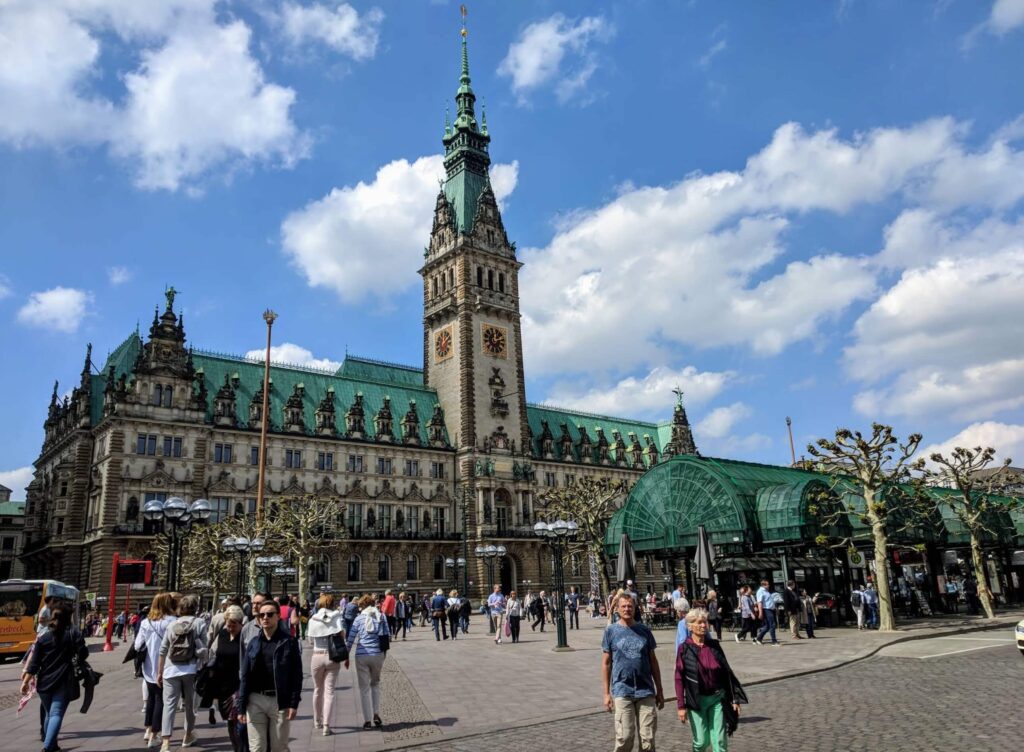
In the context of urbanization, city centre churches – in Germany, for example, Berlin Cathedral, the Jesuit-run St. Michael’s Church in Munich, or the main St. Peter’s Church in Hamburg – play an important role in a Church of the future. These are large cathedrals protected by the Fine Arts, which characterize the urban landscape and can be seen from afar. Their specific potential lies in the fact that these churches, due to their central location, their historical and aesthetic appeal and their daily opening hours, are places of worship that continue to be frequented by many, at a time when in other ways many people are abandoning the Churches. In the case of the main St. Peter’s Church in Hamburg, there were about 750 thousand visitors in 2024, while the parish community has only about 390 members. In a largely secularized society, the city centre churches offer a unique opportunity for people to meet with the Gospel, and with the Churches through the lived religion of the people.
One of the discoveries made in city centre churches is that many people do not just “visit” the church, but take advantage of the sacred space for their own benefit. This often happens in a very different way from what is provided by traditional models of belonging to the Church, and of bonding with a local community. The theologian Kristian Fechtner interprets this phenomenon as a “mild form of religiosity” that has something “casual”, transient and individual. However, it is necessary to “accept the autonomy of religious subjects and recognize the unconventional character of late-modernity devotion” [3]
In the centre of Hamburg: three basic orientations
In the light of these experiences, in the main church of St. Peter’s in Hamburg, we began to adjust the environment of the church and what we offer especially to those who “drop in by chance” with the intention of “giving them space”. This was not to exploit them, but to offer them in the space of the Church the possibility of living their religiosity and of discovering, if possible together with them, “a faith that precedes us all”. [4]
There are three fundamental orientations, interrelated by content, which guide us in the way we conceive ecclesial life in the centre of Hamburg.
Our first orientation is to offer a hospitable place to the many “undecided seekers”, so that when they enter the church, they feel welcome. Inside the church, there are several places where people can recite a silent prayer and light a candle. In addition, in those places and on the pews of the church there are printed sheets that invite prayer. Every day many people take advantage of this opportunity. At the same time, thanks to the presence of volunteer guardians and also, at certain times of the day, of pastors, we are visible and available inside the church. Several times a day, a moment of spirituality takes place in the central nave (midday prayer, evening reflection) that allows people to be present in different ways, from passive observation to active participation.
Beyond indifference
A second orientation: through religious services, sacred music, spiritual assistance, diakonia and formative activities, we ensure a clearly recognizable spiritual offering with a well-defined content. We do not want people to remain distant from the Churches, we want to dissolve indifference with kindness and charm. Only if people can discover what we as a Church stand for in terms of content, will they have an opportunity to learn about the faith today.
The third basic orientation consists of cooperation with numerous institutions of the Church and civil society (including the aid action Brot für die Welt, the Thalia Theatre, the Federal Youth Ballet School, the World Future Council, the Jobcentre, women from rural backgrounds, municipal authorities, etc.). On the one hand, we offer events in our church together with them (church services, exhibitions, panel discussions, initiatives at major societal events) and on the other hand, we are also involved outside the church as active citizens in current affairs debates and in the planning of Hamburg’s city centre.
“Putting out into the deep”, with new ways and new forms
“Put out into the deep and lower your nets for a catch” (cf. Lk 5:4). The future situation of the Christian Churches will still be difficult, but it is clear that if we set out on a journey and trust in Jesus’ call, new paths will open up and new forms will be discovered through which people can experience God’s loving care for his world today. Not all offers will meet with the desired success or even lead people to return to church permanently. This has probably always been the case in the history of Christianity, and this should not prevent us from seizing the opportunities that present themselves for ecclesial life with courage, creativity and confidence. Where we succeed, even in the urban context and in the midst of multiple processes of change, we will become what the Church, at all times, is called to be: “a community that bears witness to the fullness of life promised by God, and therefore stands in opposition to the conflicts that harm and destroy human life within God’s creation.” [5]
________________________________________
1 Pope Francis, Homily during the Eucharistic concelebration with the participants in the Plenary Assembly of the Council of European Bishops’ Conferences (CCEE), St. Peter’s Basilica, 23 September 2021.
2 Id., Homily during Vespers with bishops, priests, deacons, consecrated men and women, seminarians and pastoral workers, Lisbon, 2 August 2023
3 K. Fechtner,Mild religiös. Erkundungen spätmoderner Frömmigkeit, Stuttgart 2023, p. 160.
4 A. Rouet,Erstaunter Glaube. Dank an die religiös Uninteressierten, Ostfildern 2023, p. 103.
5 W. Huber,Synode und Konziliarität. Überlegungen zur Theologie der Synode, in: G. Rau et alii (edd.),Das Recht der Kirche, vol. 3, Gütersloh 1994, pp. 347–348.

PDF version
In Today’s Times and Places
October to December 2025
No 29 – 2025/4